
Procurement teams face mounting pressure to cut costs while finding reliable vendors. Traditional vendor selection relies on manual research, spreadsheets, and gut feelings.
This approach takes too much time and often misses important details about supplier performance, pricing trends, and potential risks.
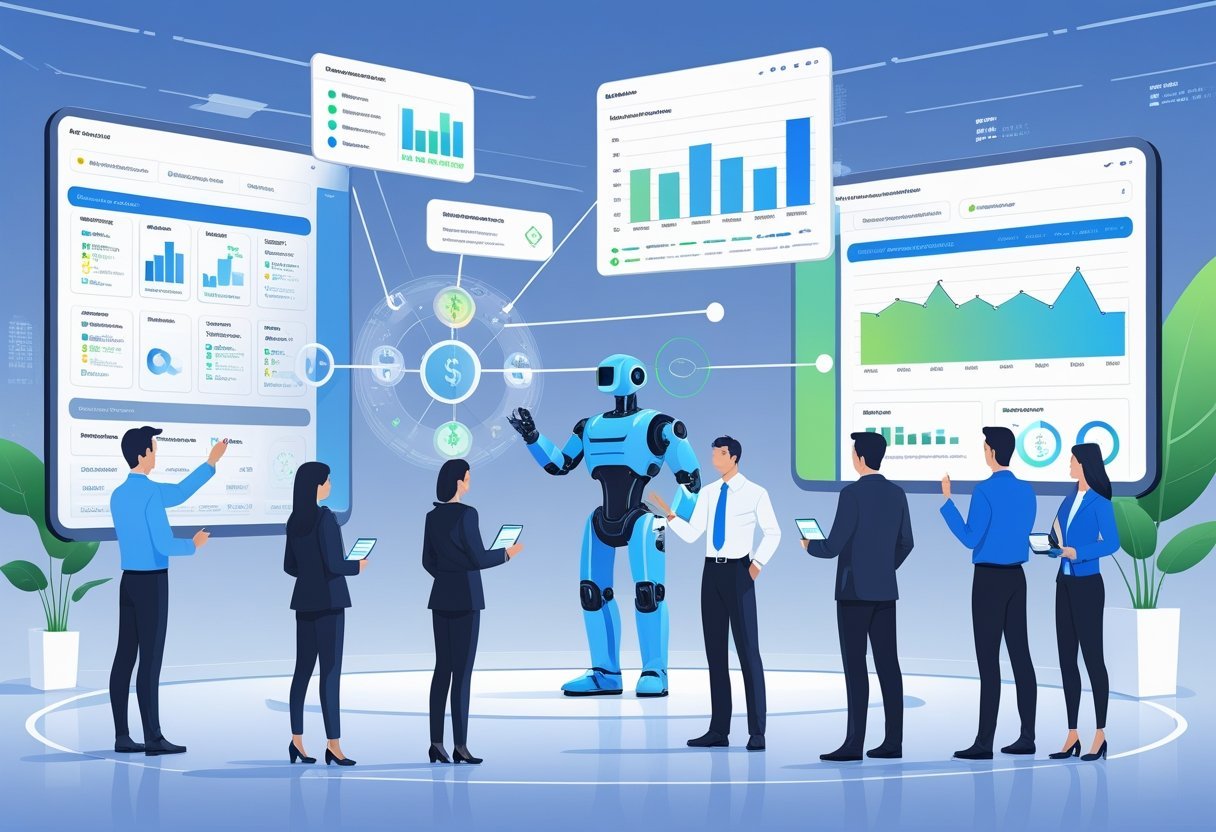
AI transforms vendor selection by analyzing massive amounts of supplier data, market trends, and historical performance to identify the best vendors for your specific needs while automatically flagging cost-saving opportunities. AI-powered procurement tools can scan through thousands of suppliers in minutes, compare pricing across markets, and predict which vendors will deliver the best value.
Major companies like PepsiCo, Siemens Energy, and Cisco already use these systems to manage their supplier networks more effectively.
AI in procurement does more than just speed up vendor selection. It continuously monitors your spending patterns, catches billing errors, predicts supply chain disruptions, and suggests contract improvements.
This means you spend less time on paperwork and more time building relationships with the vendors that matter most to your business.
Key Takeaways
- AI analyzes supplier data and market trends to help you select better vendors faster than manual methods
- Automated spend analysis and contract monitoring reduce costs by identifying savings opportunities and preventing billing errors
- Real-time risk monitoring and predictive analytics protect your supply chain from disruptions and compliance issues
The Evolution of Vendor Selection With AI
Procurement teams have shifted from manual, time-intensive processes to AI-powered vendor management systems that analyze vast datasets in seconds. This transformation addresses critical limitations in traditional approaches while enabling data-driven decisions through advanced technologies like machine learning and robotic process automation.
Limitations of Traditional Procurement Approaches
Traditional vendor selection relies heavily on manual data collection and spreadsheet analysis. Your procurement teams spend days or weeks reviewing vendor proposals, checking references, and comparing pricing structures.
This process introduces human error and unconscious bias into your decision-making. Manual evaluation methods also limit the number of vendors you can realistically assess.
You might only review 5-10 potential suppliers due to time constraints, missing better options in the market. Financial data, compliance records, and performance histories sit in separate systems, making comprehensive risk assessment nearly impossible.
Your team likely struggles to maintain consistent evaluation criteria across different buyers. One procurement specialist might prioritize cost while another focuses on delivery speed.
This inconsistency leads to suboptimal vendor relationships and missed cost-saving opportunities. Traditional approaches can't process real-time market changes or identify emerging risks quickly enough.
By the time you complete your vendor analysis, pricing conditions or supplier capabilities may have already shifted.
Shift Toward Data-Driven Decision Making
Intelligent procurement transforms how you evaluate and select vendors by processing multiple data sources simultaneously. You can now analyze vendor financial stability, past performance metrics, compliance histories, and market trends within minutes instead of weeks.
Artificial intelligence enables objective scoring systems that eliminate subjective judgments from your procurement process. The technology assigns weighted values to different criteria based on your specific business needs and organizational priorities.
Your procurement teams gain access to predictive insights that forecast vendor reliability and potential risks. These systems identify patterns in supplier behavior that human analysts might overlook, such as seasonal performance fluctuations or early warning signs of financial trouble.
Digital procurement platforms centralize vendor information, creating a single source of truth for your entire organization. You can track vendor interactions, contract terms, and performance data in real-time dashboards that update automatically.
Types of AI Technologies in Procurement
Machine learning algorithms analyze historical procurement data to identify the best-performing vendors for specific categories. These systems learn from past purchasing decisions and continuously improve their recommendations based on actual outcomes.
Robotic process automation (RPA) handles repetitive tasks like data entry, purchase order creation, and invoice processing. Your team saves hours each week by automating routine vendor communications and document management.
Large language models review contract documents and extract key terms, pricing structures, and compliance requirements automatically. You can compare hundreds of vendor contracts in the time it previously took to review just a few manually.
AI in Dynamics 365 and similar platforms integrate these technologies into your existing systems. Natural language processing helps you query vendor databases using plain English questions instead of complex search filters.
Predictive analytics tools forecast demand patterns and recommend optimal order quantities. Your procurement transformation includes real-time risk monitoring that alerts you to potential supply chain disruptions before they impact operations.
AI-Driven Vendor Selection Processes
AI transforms vendor selection from a manual, time-consuming task into a streamlined, data-driven process that identifies the best suppliers faster and with greater accuracy. Machine learning algorithms analyze vast datasets to discover potential vendors, evaluate their capabilities objectively, and predict future performance.
Automated Supplier Discovery and Shortlisting
AI accelerates supplier discovery by scanning thousands of potential vendors across multiple databases and online sources in minutes. Traditional sourcing processes require procurement teams to manually research suppliers, which can take weeks or months.
AI-powered vendor discovery tools automatically identify candidates based on your specific criteria such as:
- Product or service categories
- Geographic location and delivery capabilities
- Pricing ranges and payment terms
- Certifications and compliance requirements
- Sustainability practices
The technology continuously updates supplier information by monitoring market changes, new entrants, and emerging vendors. This gives you access to a broader pool of qualified suppliers than manual searches would uncover.
AI procurement systems create preliminary shortlists by filtering vendors against your mandatory requirements. You receive a curated list of candidates that meet your baseline standards, eliminating hours of initial screening work.
Objective Vendor Evaluation and Scoring
AI removes human bias from supplier evaluation by applying consistent scoring criteria across all candidates. Machine learning algorithms assess vendors using quantifiable metrics rather than subjective impressions.
The technology evaluates multiple dimensions simultaneously:
| Evaluation Category | AI Analysis Focus |
|---|---|
| Financial Stability | Credit scores, revenue trends, debt ratios |
| Quality Standards | Defect rates, certifications, audit results |
| Delivery Performance | On-time rates, lead times, shipment accuracy |
| Cost Competitiveness | Pricing history, total cost of ownership |
| Risk Factors | Compliance violations, legal issues, market volatility |
AI for procurement improves vendor evaluation by weighing each factor according to your business priorities. You can adjust the importance of different criteria based on specific procurement needs.
The systems generate vendor scores that allow direct comparisons between suppliers. These rankings help you identify top performers quickly and justify your selection decisions with concrete data.
Predictive Analytics for Vendor Performance
Predictive analytics examines historical vendor performance data to forecast how suppliers will perform in the future. AI analyzes patterns in delivery times, quality metrics, and responsiveness to anticipate potential issues before they occur.
The technology identifies early warning signs such as:
- Declining delivery accuracy trends
- Increasing defect rates over time
- Financial instability indicators
- Capacity constraints during peak periods
Artificial intelligence in supplier selection uses machine learning algorithms to predict which vendors will meet service level agreements consistently. You gain vendor intelligence that helps you avoid suppliers likely to cause disruptions.
AI models also forecast how vendors will respond to market changes, demand fluctuations, and supply chain disruptions. This allows you to select suppliers with proven resilience and adaptability.
Enhancing Cost Control Through AI
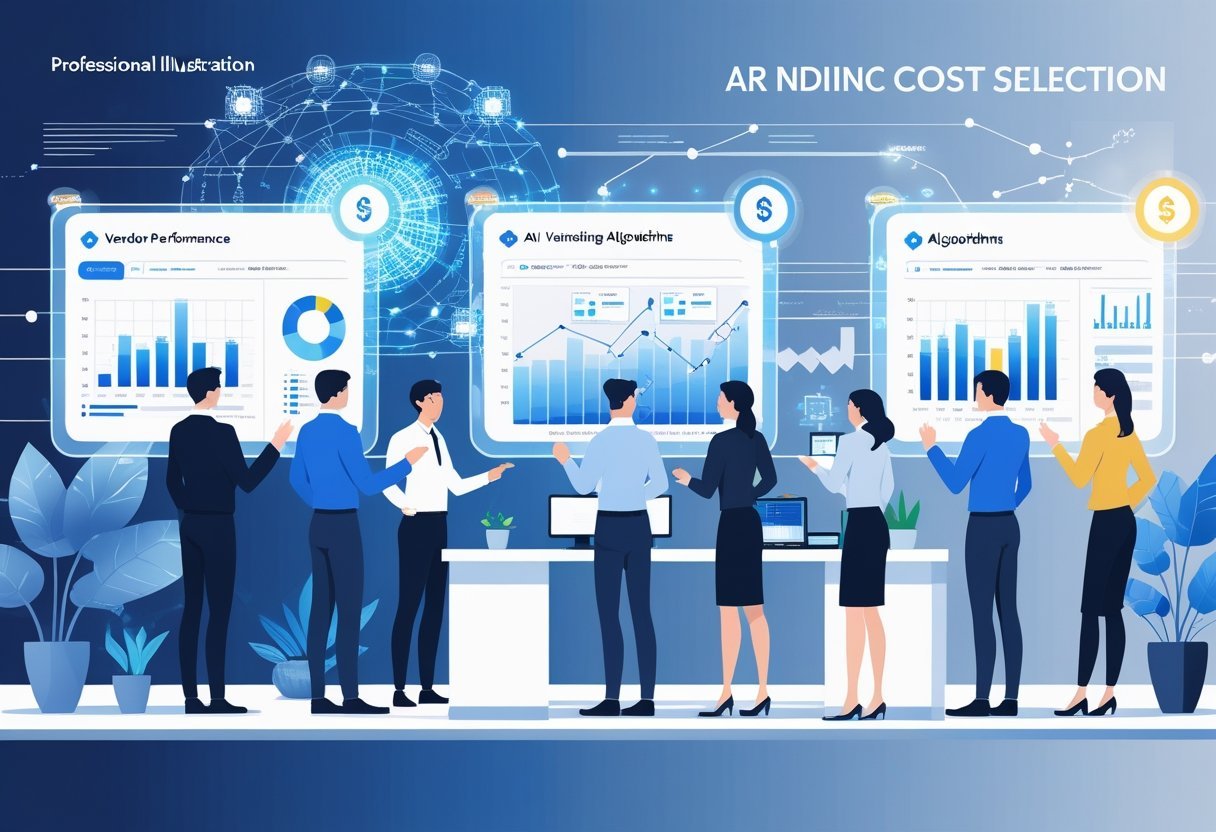
AI transforms cost control by analyzing spending patterns, monitoring market pricing, and ensuring compliance with contract terms. These capabilities help you identify savings, negotiate better deals, and prevent budget overruns.
Spend Analysis and Cost-Saving Opportunities
AI tools process your procurement data to reveal spending patterns across vendors, categories, and departments. The technology identifies duplicate purchases, maverick spending, and opportunities to consolidate suppliers for better pricing.
AI-powered cost optimization can uncover cost-saving opportunities that humans might overlook. The systems analyze historical spending data and compare it against market benchmarks to show where you're overpaying.
You get detailed reports highlighting which categories offer the most potential for savings. Machine learning algorithms categorize expenses automatically and flag unusual spending patterns.
This spend analysis helps you understand your total cost of ownership beyond just purchase prices. You can see logistics costs, quality issues, and service expenses that impact your return on investment.
Pricing Trends and Negotiation Support
AI monitors market pricing data in real-time to track how vendor prices change over time. The technology compares your current rates against market averages and competitor pricing to ensure cost efficiency.
You receive alerts when pricing trends indicate it's time to renegotiate contracts. AI agents for procurement help you enter negotiations with data-backed insights about fair market value.
The systems analyze historical pricing patterns and predict future price movements based on supply and demand factors. This pricing intelligence strengthens your negotiating position.
You can reference specific market data when discussing rates with suppliers. The technology also suggests optimal timing for purchases based on seasonal pricing trends and market conditions.
Contract Compliance and Cost Assurance
Contract analytics powered by AI review your vendor agreements to ensure both parties follow agreed-upon terms. The technology monitors delivery schedules, quality standards, and pricing commitments automatically.
You get notified immediately when vendors deviate from contract terms. AI systems track invoice accuracy against contracted rates and flag discrepancies before you process payments.
This contract compliance monitoring prevents you from overpaying due to billing errors or unauthorized price increases. Contract management becomes more efficient as AI extracts key terms and deadlines from agreements.
You avoid penalties for missed renewal dates or volume commitments. The business impact includes fewer disputes, better vendor relationships, and protection of your negotiated savings throughout the contract lifecycle.
AI's Role in Vendor Risk Management and Compliance
AI systems can automatically scan vendor data to identify risks before they become problems, while also monitoring compliance requirements across your entire supply chain. These tools analyze patterns in real-time and flag issues that would take human teams weeks to discover.
Automated Vendor Risk Assessment
AI performs vendor risk assessment by analyzing thousands of data points simultaneously. The technology scans financial records, compliance documents, and performance history to evaluate each vendor's risk profile.
Machine learning algorithms can identify potential vendor risks automatically, eliminating the manual work that procurement teams previously handled. You get consistent evaluations across all vendors instead of assessments that vary based on who reviews them.
The systems examine multiple risk factors including:
- Financial stability and credit ratings
- Legal and regulatory violations
- Cybersecurity posture and data protection measures
- Operational capacity and delivery history
- Geographic and political risks
AI removes human bias from vendor risk management decisions. Your team receives objective scores based on actual data rather than gut feelings or incomplete information.
Real-Time Risk Monitoring and Alerts
Real-time risk monitoring through AI tracks your vendors continuously after you select them. The technology monitors news feeds, regulatory databases, and market changes to detect sudden shifts with vendors that could impact your operations.
You receive immediate alerts when risk levels change. If a vendor faces financial trouble, regulatory penalties, or cybersecurity breaches, the system notifies you within hours instead of weeks.
AI processes millions of data sources including social media, stock prices, and public records. This constant scanning helps you spot problems before they affect your business.
Your procurement team can take action quickly when vendors show warning signs.
Compliance Monitoring and Regulatory Alignment
AI automates compliance monitoring by tracking regulations that apply to your vendors. The technology ensures your vendor relationships meet industry standards and legal requirements without manual document review.
You can automatically analyze payment terms, contracts, and invoices to spot non-compliance issues. AI systems flag vendors that don't meet your governance frameworks or violate data privacy rules.
The technology keeps up with changing regulations across different regions. When new compliance requirements emerge, AI updates your vendor evaluations accordingly.
Mitigating Supply Chain Risks
AI helps you identify supply chain risks by mapping your entire vendor network and analyzing dependencies. The systems predict how disruptions with one vendor could cascade through your supply chain.
You gain visibility into indirect risks from your vendors' suppliers. AI tracks multiple tiers of your supply chain to reveal hidden vulnerabilities.
The technology analyzes supply trends and forecasts future developments that could threaten your operations. Weather patterns, political instability, and market shifts all factor into risk mitigation strategies.
Your procurement team can diversify suppliers or build backup plans before disruptions occur.
Optimizing Procurement Workflows With Intelligent Automation
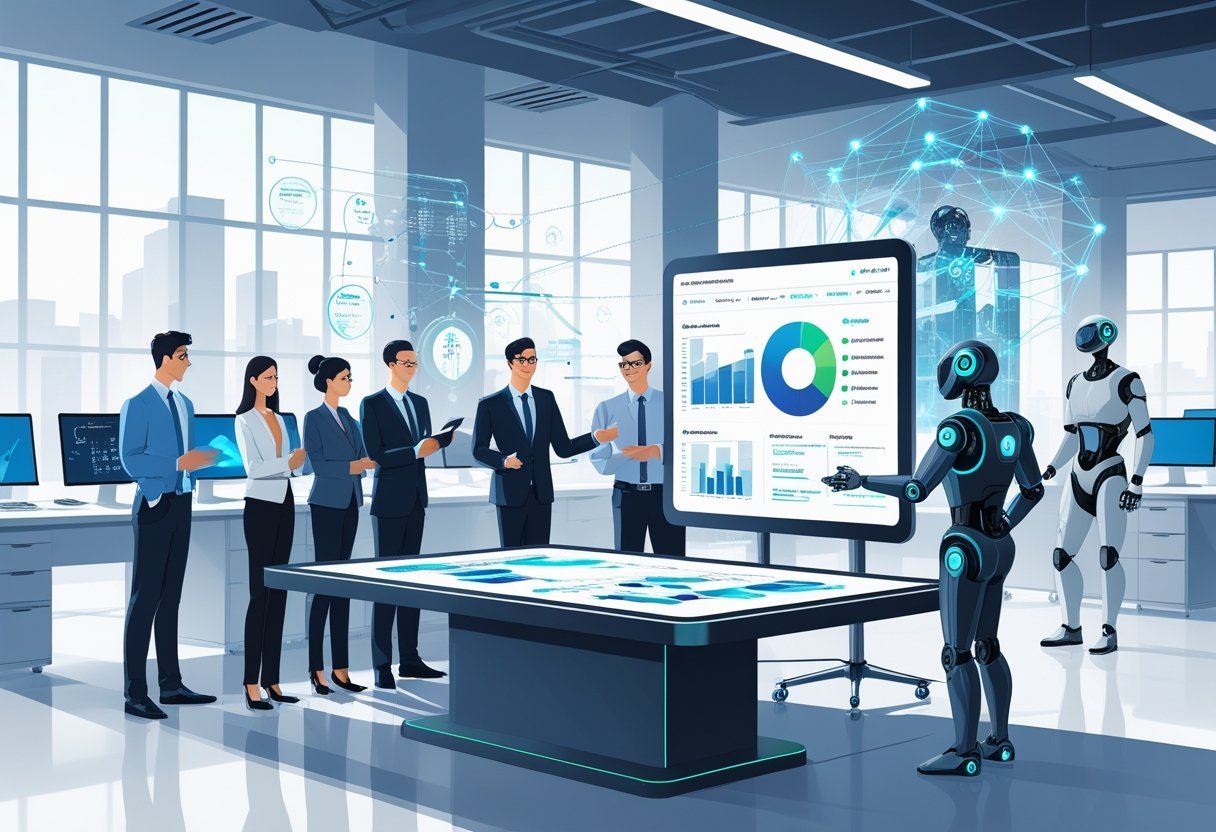
Intelligent automation transforms procurement workflows by eliminating manual tasks and introducing real-time monitoring capabilities. AI-driven procurement systems process invoices automatically, track spending patterns, and flag potential issues before they escalate.
Streamlining Procurement Operations
AI-driven procurement replaces spreadsheet-based processes with automated systems that handle routine tasks faster and more accurately. You can reduce the time spent on purchase order creation, supplier communications, and approval routing by up to 70%.
These systems learn from past transactions to suggest optimal suppliers based on price, delivery speed, and quality metrics. Procurement technology evaluates suppliers automatically by analyzing historical performance data and contract terms.
Your team spends less time on administrative work and more time on strategic decisions. The software can identify duplicate purchases, suggest bulk buying opportunities, and alert you when spending exceeds budget thresholds.
Workflow automation ensures that purchase requests move through approval chains without delays. You set rules based on purchase amount, department, or item category.
The system routes requests to the right approvers and sends reminders when approvals are pending.
Invoice Processing and OCR Integration
Optical character recognition (OCR) technology extracts data from invoices without manual data entry. You scan or upload invoices, and the system reads vendor names, amounts, dates, and line items automatically.
This eliminates typing errors and reduces processing time from hours to minutes. Your invoice processing system matches purchase orders with received goods and invoices automatically.
It flags discrepancies like price differences or quantity mismatches for review. You can process hundreds of invoices daily without increasing staff.
OCR integration works with various invoice formats, including PDFs, scanned images, and emailed documents. The technology improves accuracy over time by learning your vendor formats and business rules.
You maintain a searchable digital archive of all invoices for audits and reporting.
Continuous Monitoring and Operational Efficiency
Continuous monitoring tracks procurement activities in real-time and identifies problems as they happen. Your system alerts you when suppliers miss delivery deadlines, prices increase unexpectedly, or spending patterns change.
You respond to issues immediately rather than discovering them during monthly reviews. AI analyzes procurement data to reveal patterns that improve operational efficiency.
You see which suppliers consistently deliver on time, which departments exceed budgets, and which products cost more than alternatives. The system generates reports showing where you can cut costs or negotiate better terms.
Digital transformation in procurement gives you complete visibility into spending across all departments and locations. You track contracts, monitor compliance, and ensure adherence to purchasing policies.
Your team accesses procurement data from any device, making approvals and reviews faster.
Building Stronger Supplier Relationships With AI Insights
AI helps you track supplier performance in real time and identify opportunities to expand your supplier networks. You can use these insights to improve strategic sourcing decisions and build partnerships based on data rather than assumptions.
Supplier Performance Tracking and Management
AI systems monitor key performance indicators across your supplier base automatically. You get real-time data on delivery performance, quality levels, and compliance rates without manual tracking.
AI continuously monitors supplier performance to help you identify underperforming vendors before they disrupt your operations. The technology flags issues like frequent delays or quality problems early.
You can address these concerns proactively instead of reacting to crises. AI analyzes historical data to predict which suppliers pose the highest risk.
If a vendor shows patterns of unreliable delivery performance, the system alerts you to consider alternative options. This approach protects your supply chain from unexpected disruptions.
You can also use AI to set performance benchmarks and compare suppliers against industry standards. The data shows you which vendors consistently meet expectations and which ones need improvement conversations.
Strengthening Supplier Networks
AI provides insights into market trends and identifies opportunities to diversify your vendor base. Advanced analytics help expand and optimize supplier networks by revealing gaps in your current sourcing strategies.
The technology analyzes your existing supplier relationships and suggests where you might need backup vendors. You reduce dependency on single sources and build resilience into your supply chain.
AI also identifies new suppliers in different regions who offer competitive pricing or better delivery reliability. You can spot patterns in supplier capabilities that help you allocate work more strategically.
Some vendors excel at rush orders while others provide better value for large-volume purchases. AI helps you match the right supplier to each specific need.
Strategic Sourcing and Collaboration
AI is reshaping supplier negotiations by providing data-driven insights during contract discussions. You enter negotiations with clear information about market pricing, supplier capacity, and performance history.
The technology helps you move from transactional vendor relationships to strategic partnerships. You can identify which suppliers align best with your long-term business goals based on their track record and capabilities.
AI shows you where collaboration opportunities exist, such as joint product development or inventory sharing arrangements. Digital tools and AI strengthen supplier relationships at earlier stages in the procurement process.
You build trust through transparent performance metrics and consistent communication. The data creates a foundation for strategic sourcing decisions that benefit both parties over time.
Integrating Advanced AI Capabilities in Procurement
AI capabilities transform procurement through pattern recognition that predicts supplier behavior, language processing that automates document workflows, and visual dashboards that surface insights instantly. These technologies work together to reduce manual effort while improving decision accuracy.
Machine Learning Models for Pattern Recognition
Machine learning models analyze historical procurement data to identify patterns that humans might miss. These models examine past purchases, supplier performance metrics, and spending trends across categories.
You can use pattern recognition to predict which vendors will deliver on time based on their track record. The models flag unusual spending patterns that suggest maverick purchasing or potential fraud.
They also forecast price changes by analyzing market conditions and commodity trends.
Key applications include:
- Supplier risk scoring – Models evaluate financial stability and delivery reliability
- Demand forecasting – Algorithms predict future purchasing needs by category
- Price optimization – Systems recommend ideal contract timing based on market cycles
Early adopters of AI in procurement report cost savings of 5-10% and cycle time reductions of up to 30%. The technology learns from each transaction to improve its recommendations over time.
Leverage of Natural Language Processing and Generative AI
Natural language processing enables procurement systems to read and understand written documents like contracts and vendor proposals. NLP extracts key terms such as pricing, delivery dates, and service level agreements without manual review.
Generative AI tools like ChatGPT can draft RFP documents based on your requirements and past successful proposals. These systems generate vendor evaluation criteria and create standardized contract templates that align with your policies.
AI streamlines contract authoring and compliance monitoring by flagging clauses that deviate from standard terms. NLP engines compare vendor responses across multiple bids to identify the best match for your needs.
You can process vendor questions faster during the bidding process with automated Q&A responses. The technology also summarizes lengthy vendor documents into brief overviews.
This saves your team hours of reading time while ensuring no critical details get overlooked.
Real-Time Dashboards and Data Visualization
Real-time dashboards consolidate procurement data from multiple systems into one view. You see current spending by category, vendor performance metrics, and contract compliance status at a glance.
These dashboards update automatically as new data flows in from purchase orders and invoices. You can track savings targets and identify categories where spending exceeds budget immediately.
Visual tools display supplier risk levels using color-coded indicators. Heat maps show which regions or categories face the highest supply chain disruption potential.
Trend lines reveal whether vendor performance improves or declines over time.
Dashboard features typically include:
- Spend analysis by category, department, and vendor
- Contract expiration alerts and renewal recommendations
- Supplier performance scorecards with delivery and quality metrics
- Budget vs. actual spending comparisons
AI processes vast amounts of procurement data to uncover insights that support faster decision-making. Your executives can access these dashboards to understand procurement impact on business goals without requesting custom reports.
Frequently Asked Questions
AI transforms procurement through automation, data analysis, and predictive capabilities that reduce costs and improve vendor decisions. These tools handle everything from contract review to risk assessment across the entire procurement cycle.
What are the key benefits of integrating AI into procurement processes?
AI enables procurement teams to work faster and make better decisions with less manual effort. According to Gartner's 2025 Procurement Innovation Report, 78% of global enterprises have either implemented or are actively scaling AI-powered procurement tools.
You gain real-time visibility into spending patterns and supplier performance. AI processes large amounts of data to identify cost inefficiencies, duplicate payments, and opportunities for vendor consolidation.
Procurement teams using AI are 2.3 times more likely to act on data in real time rather than looking back at past transactions. This means you can address problems before they become costly issues.
You can also automate entire workflows from purchase requests to final payments. This reduces the need for human intervention and speeds up processing times significantly.
How does artificial intelligence enhance supplier evaluation and selection?
AI revolutionizes vendor evaluation by analyzing vast datasets to score and rank potential suppliers. The technology examines financial stability, past performance, compliance records, and market reputation across multiple sources.
You can automatically extract key data from supplier proposals that arrive in different formats like PDFs and spreadsheets. This eliminates hours of manual work comparing vendor responses.
AI uses predictive modeling to assess which suppliers will deliver the best value and reliability. The system looks at historical patterns and current market conditions to forecast future performance.
Machine learning algorithms continuously refine supplier scoring as new information becomes available. This gives you an up-to-date view of vendor capabilities rather than relying on annual reviews.
Can AI tools provide cost savings in procurement, and if so, how?
AI delivers measurable cost reductions through multiple channels. PwC reports that companies leveraging AI for sourcing see a 7-12% cost reduction annually.
You save money by detecting duplicate payments and identifying unnecessary spending. AI flags invoices that don't match purchase orders or receipts before you pay them.
The technology recommends vendor consolidation strategies based on spending patterns. Combining purchases with fewer suppliers often unlocks volume discounts and better terms.
AI also speeds up invoice processing, which reduces administrative costs. Some organizations achieve up to 90% straight-through processing, meaning invoices get approved and paid without human review.
You avoid costly contract overruns by getting alerts when spending approaches agreement limits. The system tracks all purchases against negotiated rates and flags deviations automatically.
What types of AI technologies are currently being used in procurement, and what are their capabilities?
Three main types of AI technologies power modern procurement systems. Machine Learning analyzes past transactions to classify spending, spot unusual patterns, and forecast future trends.
Natural Language Processing reads contracts and extracts important clauses, obligations, and deadlines. This technology flags potential compliance issues and summarizes complex documents quickly.
Robotic Process Automation executes rule-based tasks like routing invoices and generating purchase orders. RPA works alongside the other AI technologies to handle repetitive work.
These capabilities work together to give you different benefits. Machine learning helps with spend analysis and demand forecasting. NLP speeds up contract review and approval.
RPA automates invoice matching and payment processing. You can also use AI for predictive analytics that helps you plan inventory and avoid stockouts.
The technology learns from historical data and external factors to forecast what you'll need.
In what ways can AI contribute to risk management during vendor selection?
AI systems assess supplier risk continuously instead of just once per year. AI enhances vendor selection and risk management by monitoring multiple risk indicators simultaneously.
You get alerts about financial instability, compliance violations, and geopolitical concerns before signing contracts. The system tracks news sentiment, financial filings, and regulatory actions related to your suppliers.
AI evaluates ESG factors like environmental practices and labor conditions. The technology spots patterns that humans might miss when reviewing hundreds of suppliers.
It can identify warning signs like sudden changes in pricing, delivery delays, or quality issues. You can model different scenarios to understand how supplier problems would affect your operations.
AI calculates the impact of potential disruptions and suggests backup options.
How does AI facilitate contract management and ensure compliance in the procurement cycle?
AI transforms contract lifecycle management by automatically reading and analyzing agreement terms. Natural Language Processing extracts key information like payment terms, renewal dates, and performance requirements.
You get automatic alerts before contracts expire or when key milestones approach. This prevents lapses in coverage and gives you time to renegotiate better terms.
The technology tracks whether actual spending matches negotiated rates and conditions. AI flags purchases that violate contract terms so you can address them quickly.
You can use generative AI to draft supplier communications and redline contract language. This speeds up negotiations and helps maintain consistent terms across vendors.
AI also monitors compliance with regulatory requirements throughout the procurement process. The system checks that vendors meet necessary certifications and follow required procedures before approving purchases.