
Small business owners spend countless hours on repetitive tasks that eat up time better spent growing their company. Data entry, email responses, appointment scheduling, and customer follow-ups can consume entire workdays.
AI automation now handles these tasks for you, freeing your team to focus on what actually drives revenue.
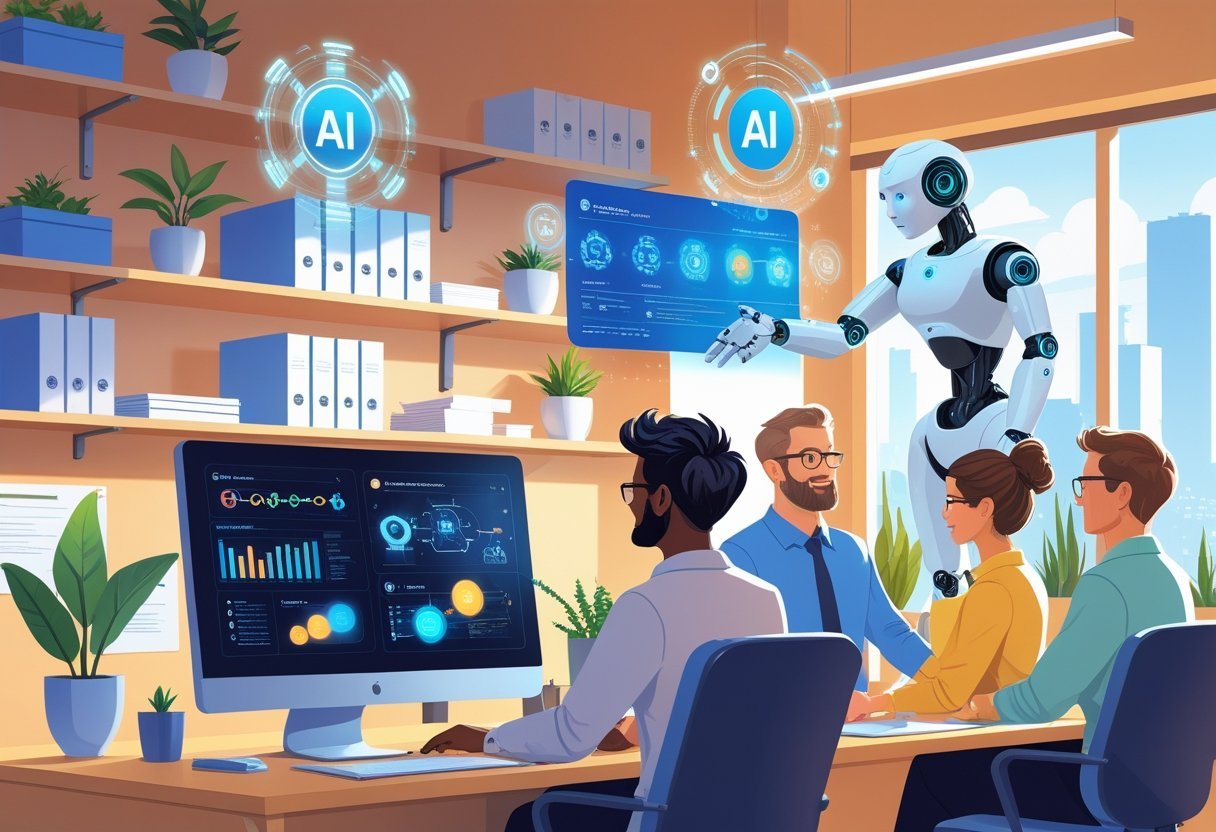
Business managers are using AI to automate lead follow-up, document creation, customer support, and back-office tasks without replacing their employees or spending enterprise-level budgets. AI automation for small businesses means removing boring, repetitive work so your staff can spend time on customers and growth.
You don't need a tech team or massive investment to get started. The small businesses winning with AI in 2025 start with one or two simple workflows that solve real problems.
Most see results within 30 days and spend less than they would on a part-time employee.
Key Takeaways
- AI helps small businesses automate repetitive tasks like lead follow-up, scheduling, and document drafting without requiring large budgets
- Businesses using AI see higher efficiency and reduced manual work while employees focus on higher-value activities
- Starting small with one or two workflows typically costs less than hiring additional staff and delivers measurable results within weeks
The Shift From Manual Work to AI Automation
Small businesses are moving away from time-consuming manual tasks and adopting AI automation to handle daily operations. This shift is happening faster than many business owners expect, driven by affordable tools and the need to compete more effectively.
Manual Processes That AI Replaces
AI automation now handles many tasks that used to require hours of human effort each week. Your business can automate data entry across invoicing, customer records, and financial reporting.
These systems extract information from documents and populate your databases without manual typing. Customer service workflows are another area where AI replaces repetitive work.
Chatbots handle common questions, route support tickets, and provide 24/7 responses. Your team only steps in for complex issues that need human judgment.
AI also manages scheduling and appointment booking automatically. The system checks availability, sends reminders, and handles rescheduling requests.
This eliminates the back-and-forth emails that waste time. Marketing tasks like email campaigns, social media posting, and content creation now run through AI tools.
You can set up campaigns that send personalized messages based on customer behavior. AI is transforming small business workplaces by handling these repetitive marketing activities.
Other manual processes being replaced include expense tracking, inventory monitoring, and basic bookkeeping tasks that previously required constant attention.
The Growth of AI Adoption in SMBs
AI adoption among small and medium-sized businesses has accelerated significantly heading into 2025. Research shows that 92% of executives anticipate implementing AI-enabled automation in their workflows this year.
The shift gained momentum around 2023-2024 when AI tools became more accessible and affordable for smaller operations. You no longer need enterprise budgets or technical teams to implement artificial intelligence solutions.
Small businesses report achieving 77% time savings on routine activities after implementing AI automation. This frees up your staff to focus on growth initiatives instead of repetitive tasks.
The automation market reflects this trend, with workflow automation projected to reach $18.45 billion by 2025. SMBs make up a growing portion of this market as tools become designed specifically for their needs.
Companies using AI in their workflows could see a 40% boost in workforce productivity over the next decade. This operational efficiency gain explains why 80% of organizations will adopt intelligent automation by 2025.
Barriers and Opportunities for Small Businesses
Your business may face several barriers when considering AI automation. Many SMB owners believe they lack the technical skills needed to implement these systems.
However, no-code and low-code platforms now let you create workflows without programming knowledge. Cost concerns often hold businesses back from adopting AI.
The reality is that modern tools offer affordable pricing models designed for smaller budgets. You can start with free versions and scale up as you prove ROI.
Some business owners worry their processes are too complex for automation. AI excels at extracting data from messy, unstructured documents and handling variable inputs.
You can break complex workflows into smaller pieces and automate gradually. Your business gains competitive advantages through faster response times and consistent service quality.
You can scale operations without proportionally increasing your staff or overhead costs. Early adopters are establishing market leadership while competitors struggle with manual processes.
The window for gaining first-mover advantages is narrowing as more businesses implement AI automation throughout 2025.
Core Benefits of AI for Small Business Operations
AI tools help small businesses work faster and reduce errors while cutting operational costs. These technologies automate repetitive tasks and free up your time to focus on growing your business.
Increased Productivity and Efficiency
AI dramatically boosts your operational efficiency by handling routine tasks that normally consume hours of manual work. When you implement AI-powered automation, your team can process more work in less time without adding staff.
AI adoption has more than doubled since 2023, with nearly 39% of small businesses now using these technologies. This rapid growth happens because AI automates repetitive tasks and reduces operational bottlenecks.
Your employees gain more time for strategic work when AI handles data entry, scheduling, and customer inquiries. Workflow automation tools can manage appointment scheduling, email responses, and document processing without human input.
This shift lets your team focus on creative problem-solving and customer relationships that actually grow your business. AI also analyzes large amounts of data quickly to deliver actionable insights.
You can make faster decisions based on real patterns rather than guesswork. Businesses using AI report that employees can focus on more impactful business-building activities instead of getting stuck on repetitive tasks.
Improved Quality and Consistency
AI maintains consistent quality standards across your operations without the variation that comes with manual work. Your customers receive the same level of service every time, regardless of which team member handles their request.
Automated systems follow exact rules and procedures without getting tired or distracted. This reliability reduces errors in tasks like data entry, invoice processing, and inventory management.
You eliminate the costly mistakes that happen when employees rush through repetitive work. Businesses using generative AI report that employees are much more likely to exceed expectations.
The technology handles routine work accurately, which allows your staff to deliver higher-quality results on complex tasks that need human judgment. Quality control becomes easier when AI flags unusual patterns or potential problems.
You catch issues before they reach customers. Your business builds a reputation for dependable service that keeps clients coming back.
Time and Cost Savings
AI reduces your labor costs by automating work that would otherwise require additional employees. You get more done with your current team size, which directly improves your cost efficiency.
The financial impact shows up quickly in reduced overtime and lower staffing needs for routine operations. Small businesses using AI technologies can reallocate budget from manual tasks to growth initiatives.
Your money goes toward marketing, product development, or customer service improvements instead of administrative overhead. Time savings compound across your entire operation.
Tasks that took hours now finish in minutes. Your team processes customer orders faster, responds to inquiries immediately, and completes administrative work without delays.
Key areas where you save time and money:
- Customer service automation reduces response times from hours to seconds
- Automated scheduling eliminates back-and-forth emails
- Data analysis happens instantly instead of requiring days of manual review
- Document processing completes without manual data entry
Most small businesses now use at least one AI-enabled tool, showing that the technology has become accessible and affordable. The initial investment pays back through ongoing efficiency gains that improve your bottom line month after month.
Key Applications of AI in Small Businesses
AI tools handle repetitive tasks across marketing, customer interactions, and sales processes. These applications help you save time, reduce costs, and deliver better results to your customers.
AI for Marketing Strategies
AI marketing transforms how you plan and execute campaigns. You can use AI tools to analyze customer data and identify patterns in buying behavior.
This helps you create targeted campaigns that reach the right people at the right time. AI automation saves small businesses up to 26 hours per week while cutting costs by 40%.
Marketing automation software handles email campaigns, social media posting, and content scheduling without manual input. You set the parameters once and the system runs continuously.
AI-powered tools also improve your marketing strategies through predictive analytics. These systems analyze past campaign performance and suggest improvements.
You get real-time insights about which messages work and which audiences respond best. Content creation becomes faster with AI assistance.
You can generate social media posts, email templates, and ad copy in minutes instead of hours. The technology learns your brand voice and maintains consistency across all channels.
AI-Powered Customer Service and Experience
AI chatbots provide instant responses to customer questions 24/7. Your customers get help immediately without waiting for business hours or staff availability.
These AI-powered chatbots handle common questions about products, services, pricing, and policies. They collect customer information and route complex issues to human agents when needed.
This reduces response times and improves customer experience. AI applications in customer service help you maintain quality while managing more requests.
The systems learn from each interaction and improve their responses over time. Personalization reaches new levels with AI analysis.
The technology tracks individual customer preferences and purchase history. You can then offer tailored recommendations and customized support based on each person's needs.
AI also monitors customer sentiment through conversation analysis. You identify unhappy customers quickly and address problems before they escalate.
Sales Automation and Personalization
AI streamlines your sales process from lead generation to closing deals. Automated systems qualify leads by analyzing behavior and engagement patterns.
You focus your time on prospects most likely to convert. Sales automation tools manage follow-up emails, appointment scheduling, and pipeline tracking.
Small businesses can manage entire business processes including email marketing and customer relationship management through AI platforms. The technology scores leads based on multiple factors like website visits, email opens, and content downloads.
You prioritize outreach to high-value prospects and nurture others automatically. Personalization in sales means each customer receives relevant product recommendations and offers.
AI analyzes purchase history and browsing behavior to suggest items they actually want. This increases conversion rates and average order values.
AI Use in Business Functions Beyond Marketing
Small businesses apply AI across multiple departments to cut down on repetitive tasks and improve accuracy. AI tools handle inventory tracking, financial reporting, and employee management tasks that used to require hours of manual work.
Operations and Inventory Management
AI helps you track inventory levels in real time and predict when you need to reorder products. These systems analyze past sales data to forecast demand and prevent stockouts or overstock situations.
You can automate warehouse operations with AI-powered tools that optimize storage locations and picking routes. The technology reduces the time your team spends searching for items and organizing shelves.
AI adoption in operations and logistics is one of the most common applications among small businesses.
Inventory management software uses machine learning to spot patterns in your sales cycles. This helps you make better decisions about ordering and reduces waste from expired or outdated products.
Finance and Accounting Automation
AI tools process invoices, track expenses, and categorize transactions without manual data entry. You can set up systems that automatically match receipts to credit card charges and flag unusual spending patterns.
Financial management becomes faster when AI handles bookkeeping tasks like reconciling accounts and generating reports. The software catches errors that humans might miss and keeps your records accurate.
Small businesses use AI to perform specialized functions like crafting financial reports that previously required professional help.
Common AI finance tasks:
- Invoice processing and payment tracking
- Expense categorization and reporting
- Cash flow forecasting
- Tax preparation assistance
Human Resources and Talent Development
AI screens resumes and ranks candidates based on job requirements you set. This cuts the time you spend reviewing applications from hours to minutes.
You can use AI chatbots to answer employee questions about benefits, time off policies, and company procedures. The bots handle routine inquiries so your HR team can focus on complex issues.
AI also creates personalized training programs based on each employee's skills and learning pace. Performance tracking systems use AI to analyze employee data and identify who might need additional support or training.
These tools help you spot trends in employee satisfaction before problems grow.
AI Technologies Powering Automation
Small businesses rely on several core AI technologies to automate manual work. Machine learning and deep learning systems learn from your business data to improve over time, while natural language processing handles text-based tasks and customer communications.
Machine Learning and Deep Learning
Machine learning enables your business systems to learn patterns from data without explicit programming. When you use these tools, they analyze your historical business information to make predictions and decisions automatically.
Deep learning takes this further by processing complex data through multiple layers. This technology powers advanced features like image recognition for quality control and voice recognition for customer service.
Your automated workflows get smarter over time because these systems continuously learn from new data. They identify trends in customer behavior, detect anomalies in financial transactions, and optimize inventory levels based on past performance.
Key applications include:
- Customer segmentation and targeting
- Fraud detection in financial operations
- Demand forecasting for inventory
- Automated quality inspection
- Personalized product recommendations
Natural Language Processing (NLP) and Generative AI
Natural language processing allows AI systems to understand and generate human language. Your business can use NLP to automate customer support emails, process documents, and analyze feedback without manual reading.
Generative AI creates new content based on your input. You can generate marketing copy, product descriptions, email responses, and social media posts in seconds rather than hours.
These technologies power chatbots that handle customer inquiries 24/7. They extract key information from contracts and invoices automatically.
They also summarize long documents into actionable insights.
Common NLP applications:
- Automated email responses
- Document classification and routing
- Sentiment analysis of customer feedback
- Content generation for marketing
- Voice-to-text transcription
Predictive Analytics and OCR
Predictive analytics uses your historical data to forecast future outcomes. You can anticipate customer churn, predict inventory needs, and identify potential equipment failures before they happen.
Optical character recognition (OCR) converts images and scanned documents into editable text. This technology extracts data from invoices, receipts, and forms automatically, eliminating manual data entry.
Your finance team benefits most from OCR when processing invoices and expense reports. Sales teams use predictive analytics to prioritize leads with the highest conversion probability.
Operations managers forecast maintenance needs and supply chain disruptions.
| Technology | Primary Use | Time Saved |
|---|---|---|
| Predictive Analytics | Forecasting and planning | 30-40% |
| OCR | Document processing | 70-88% |
Best Practices for AI Implementation in Small Businesses
Start with tools that solve specific problems in your business rather than trying to automate everything at once. Focus on secure data handling and transparent processes that build trust with your customers and employees.
Choosing and Integrating AI Tools
Pick AI tools based on the tasks that consume the most time in your daily operations. Look for solutions that offer free trials so you can test them before committing to a subscription.
ChatGPT Plus or Claude Pro works well for writing emails, creating content, and analyzing documents for around $20 per month. Otter.ai or Fireflies records meetings and generates summaries with action items for $15 per month or less.
Canva Magic Studio handles graphics and social media posts for about $15 per month. Test one tool at a time for at least two weeks.
Track how many hours it saves and whether your team actually uses it. If a tool sits unused after 30 days, cancel it and try something else.
Choose platforms that connect with your existing software. A chatbot that doesn't sync with your customer database creates more work instead of less.
Most modern AI tools offer integrations with popular business software through built-in connections or services like Zapier.
App Integration and Workflow Automation
Connect your AI tools to create automated workflows that handle repetitive tasks without manual input. AI-driven automation works best when you chain multiple apps together to move data automatically.
Set up these common automations:
- When a customer fills out a contact form, AI categorizes the inquiry and sends it to the right team member
- When you receive an invoice by email, AI extracts the data and adds it to your accounting software
- When a meeting ends, AI sends a summary with action items to all participants
Most app integration platforms like Zapier, Make, or built-in CRM features let you build these workflows without coding. Start with one workflow per week and add more as you get comfortable with the process.
Ensuring Data Privacy and Ethical AI Use
Never feed customer data into free AI tools that use your inputs for training. Pay for business-tier subscriptions that guarantee data privacy protections and don't share your information.
Tell customers when they're interacting with AI. A chatbot that pretends to be human damages trust when people figure it out.
Label automated responses clearly and offer easy access to human support when needed. Review your AI tools regularly to make sure they handle sensitive information correctly.
Check these points monthly:
| Privacy Check | What to Verify |
|---|---|
| Data storage | Where your business data is stored and who can access it |
| Training usage | Whether your inputs train the AI model |
| Encryption | If data transfers use secure protocols |
| Compliance | Whether tools meet GDPR or similar regulations |
Create a simple policy that explains how your business uses AI for knowledge management and customer service. Share it on your website and update it when you add new tools.
Emerging Trends and Future Outlook for AI in SMBs
Small businesses are moving beyond basic AI tools toward more advanced systems that work independently and make decisions. The next wave focuses on AI agents that handle complete workflows, advanced content creation that requires minimal human input, and smarter ways to track what competitors are doing.
AI Agents and Virtual Assistants
AI agents are becoming smarter and more capable of working without constant supervision. Unlike basic chatbots, these systems can complete multi-step tasks across different departments.
You can deploy them to handle customer service inquiries, process orders, and even manage scheduling without human intervention. Small businesses using AI report that 78% of business buyers believe AI will match human capabilities within the next decade.
This means virtual assistants will soon handle complex decision-making that currently requires your direct involvement. The difference between traditional virtual assistants and AI agents lies in autonomy.
AI agents can access your CRM data, pull information from multiple sources, and take action based on what they learn. They work 24/7 and get better at their jobs over time through machine learning.
Content Generation and Automation Advancements
Content creation tools powered by AI are getting more sophisticated and producing higher-quality output. You can now generate blog posts, social media updates, email campaigns, and product descriptions in minutes instead of hours.
ChatGPT and similar tools have improved their ability to match your brand voice and write content that sounds human. Small businesses are using AI for marketing campaigns by letting these systems pick subject lines, determine optimal send times, and personalize messages for different customer segments.
AI-powered automation now handles the entire content workflow. You provide basic guidelines, and the system researches topics, creates drafts, optimizes for search engines, and schedules publication.
This lets your small team produce content at a volume that would normally require a full marketing department.
Competitor Analysis and Decision Support
AI tools now track your competitors automatically and alert you to important changes in their strategy. These systems monitor pricing updates, new product launches, marketing campaigns, and customer reviews across multiple platforms.
You get real-time insights that help you make faster business decisions. The AI analyzes patterns in competitor behavior and suggests specific actions you can take to maintain your competitive edge.
Instead of spending hours manually checking competitor websites and social media, you receive automated reports that highlight what matters most. Decision support systems combine competitor data with your own business metrics to recommend strategic moves.
They can predict how price changes might affect your market position or identify gaps in competitor offerings that you could fill.
Frequently Asked Questions
Small businesses often have similar concerns when exploring AI solutions, from finding affordable tools to maintaining customer relationships. These practical questions address the real challenges you face when adding AI to your operations.
What are effective AI tools for automating tasks in small businesses?
Chatbots handle customer inquiries 24/7 without requiring you to hire additional staff. These tools answer common questions, book appointments, and help customers make purchases even when you're closed.
AI-powered accounting software like FreshBooks automates invoicing and payment tracking. The system sends payment reminders to clients, categorizes your expenses, and generates reports for tax season.
Email marketing platforms use AI to personalize campaigns based on customer behavior. You can automatically send targeted messages to different customer segments without manually sorting through your contact list.
Inventory management systems predict when you need to reorder products. AI-powered inventory tools analyze sales patterns and seasonal trends to prevent both overstocking and shortages.
Social media scheduling tools plan and post content across multiple platforms. These systems also analyze which posts get the most engagement so you can adjust your strategy.
How can small business owners implement AI for marketing purposes?
AI analyzes your customer data to identify patterns in purchasing behavior. This information helps you target the right people with relevant offers instead of sending generic messages to everyone.
Predictive analytics tools show you which products customers are likely to buy next. You can create personalized recommendations that increase your conversion rates without manually reviewing each customer's history.
AI copywriting assistants help you write product descriptions, email subject lines, and social media posts faster. These tools suggest variations and improvements based on what typically performs well in your industry.
Automated A/B testing platforms test different versions of your ads and landing pages. The AI automatically shows the best-performing version to more people while you focus on other tasks.
Customer segmentation happens automatically based on demographics, purchase history, and browsing behavior. You can then send different marketing messages to each group without sorting contacts manually.
Which free AI platforms can small businesses use to streamline their operations?
Google's free AI tools include Gmail's smart compose and smart reply features that speed up email responses. Google Workspace also offers AI-powered meeting transcription and summary tools.
ChatGPT has a free tier that helps you draft content, brainstorm ideas, and answer business questions. You can use it to write initial drafts of emails, blog posts, or social media content.
Canva's free version includes AI design features that suggest layouts and generate images. The platform helps you create professional-looking graphics without hiring a designer.
HubSpot offers free CRM software with basic AI features for tracking customer interactions. The system organizes contact information and reminds you when to follow up with leads.
Microsoft Bing Chat provides AI-powered search and content creation at no cost. You can use it for market research, competitor analysis, and generating business ideas.
In what ways is AI transforming workplace efficiency for small businesses and startups?
AI reduces manual tasks like data entry by automatically extracting information from documents and forms. Your team spends less time typing numbers into spreadsheets and more time on strategic work.
Document processing AI reads invoices, receipts, and contracts to pull out key information. This automation cuts the time you spend on paperwork by 60-80% compared to manual processing.
Meeting transcription tools record and summarize your conversations automatically. You get action items and key points without assigning someone to take notes.
Calendar management AI schedules meetings by finding times that work for everyone involved. The system handles the back-and-forth emails that normally waste hours each week.
Task prioritization tools analyze your workload and suggest which items need attention first. This helps you focus on what matters most instead of getting distracted by less important tasks.
How can AI assist small businesses in customer service and experience enhancement?
AI chatbots provide instant responses to customer questions at any time of day. Studies show that businesses using chatbots see faster response times and increased customer satisfaction.
Sentiment analysis tools monitor customer feedback across reviews and social media. You can quickly identify unhappy customers and address their concerns before they share negative experiences publicly.
AI-powered help centers suggest relevant articles based on what customers type into the search bar. This self-service approach solves simple problems without requiring human intervention.
Personalized product recommendations increase sales by showing customers items they're likely to want. The AI learns from browsing history and past purchases to make accurate suggestions.
Voice AI handles phone calls and routes customers to the right department. Some systems can resolve basic issues entirely through conversation without transferring to a human agent.
What strategies should small businesses follow to ensure a smooth transition towards AI adoption?
Start with one repetitive task that takes up significant time each week. Test AI tools on this single process before expanding to other areas of your business.
Choose AI solutions that integrate with software you already use. This prevents you from having to learn completely new systems or transfer all your existing data.
Train your team on how to work alongside AI rather than replacing them with it. AI handles routine tasks while humans focus on creative and strategic decisions.
Set clear goals for what you want AI to accomplish. Measure specific metrics like time saved, cost reduction, or customer satisfaction improvements.
Keep human oversight in customer-facing AI interactions. Have real people available to step in when the AI can't handle complex situations or when customers request human assistance.